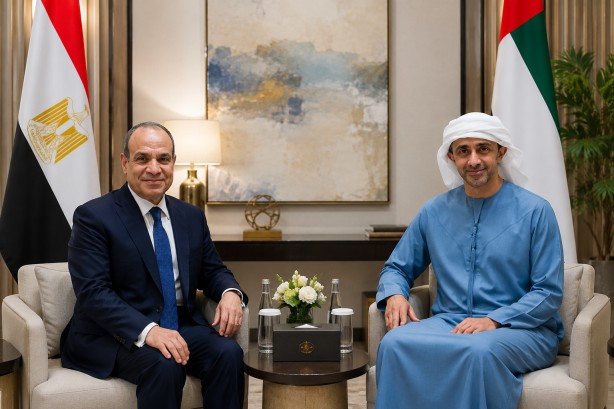
In Abu Dhabi, a crucial meeting took place between UAE Deputy Prime Minister and Minister of Foreign Affairs Sheikh Abdullah bin Zayed Al Nahyan and Egyptian Foreign Minister Dr. Badr Abdelatty. The discussions centered on the pressing issues in the Middle East, particularly focusing on reducing regional tensions. Both ministers delved into strategies to enhance cooperation at both regional and international levels, aiming to curtail the ongoing escalation and ensure the crucial Strait of Hormuz remains a free and secure passage, adhering to international law.
The meeting underscored the necessity of attaining a long-term peace, security, and stability across the Middle East, highlighting the vital role these elements play in meeting the aspirations of the population for development and prosperity. The dialogue between the two leaders also touched on the robust bilateral relations shared by the UAE and Egypt, emphasizing the exploration of opportunities to broaden collaboration in various sectors to support their mutual economic and developmental goals.
Sheikh Abdullah bin Zayed Al Nahyan took the opportunity to reaffirm the deep-rooted ties between the UAE and Egypt. He highlighted the ongoing expansion of their strategic partnership, which continues to strengthen with time. This partnership not only reflects mutual respect but also a shared vision for regional stability and growth, aligning with the broader objectives of the two nations.
Furthermore, the discussions between Sheikh Abdullah and Dr. Badr Abdelatty were particularly significant in the context of the current geopolitical climate. Ensuring the freedom of navigation through the Strait of Hormuz is crucial, given its status as a vital maritime route for global energy supplies. The ministers’ commitment to bolstering regional cooperation is seen as a proactive measure towards mitigating tensions and fostering an environment conducive to peace and development.
In conclusion, the meeting in Abu Dhabi exemplifies the continuous efforts by the UAE and Egypt to address regional challenges collectively. By focusing on strengthening their strategic partnership and exploring new avenues for cooperation, both nations aim to not only benefit their citizens but also contribute positively to the stability and prosperity of the broader Middle East region.