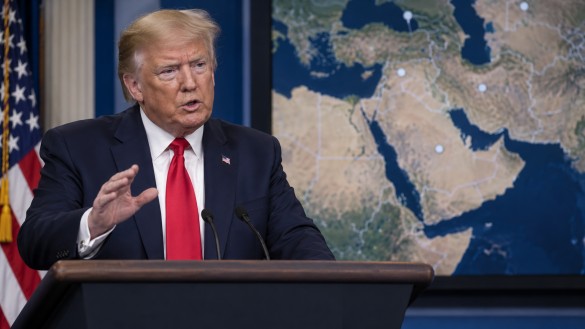
Amid rising tensions in the Middle East, U.S. President Donald Trump has hinted at the possibility of additional military strikes against Iran. This development coincides with threats from Iran’s Islamic Revolutionary Guard Corps (IRGC) to retaliate against U.S. military bases due to American naval activities near the crucial Strait of Hormuz.
The situation has intensified with Iran cautioning against the presence of U.S. forces in the region, claiming further incidents of vessels hitting mines in this strategic maritime passage. Such incidents are escalating concerns about the security of maritime routes and the potential impact on the global oil supply chain.
The backdrop to these tensions includes the ongoing U.S. blockade on Iranian oil exports, which U.S. Central Command asserts has been in effect for over 100 days. This blockade is said to have prevented billions of dollars’ worth of Iranian oil exports, exacerbating the economic pressure on Tehran.
Adding to the regional complexity, Israeli Prime Minister Benjamin Netanyahu has advocated for political change in Iran, a stance that contributes to the strained relations between the two nations. His comments come as the region remains on edge about the possibility of further military actions.
In another part of the Middle East, security concerns are mounting due to Houthi missile attacks targeting Saudi Arabia. This situation has prompted international appeals for restraint, as regional tensions threaten the stability of energy infrastructure, commercial shipping, and broader regional peace.