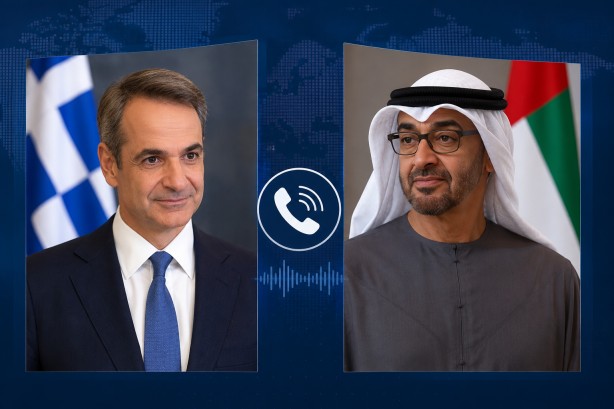
In a recent phone conversation, UAE President Sheikh Mohamed bin Zayed Al Nahyan and Greek Prime Minister Kyriakos Mitsotakis focused on the implications of the ongoing conflict involving Iran, particularly its effects on regional security and international maritime stability. Their discussion centered on how the escalating tensions could disrupt shipping routes, especially through the strategic Strait of Hormuz, a critical passage for global oil transport. Both leaders expressed concerns over these developments and deliberated on strategies to mitigate the challenges that are intensifying across the region.
During their exchange, Sheikh Mohamed and Prime Minister Mitsotakis reaffirmed their dedication to enhancing the UAE-Greece Comprehensive Strategic Partnership. This commitment underscores a shared interest in fostering stronger bilateral relations. The conversation also highlighted the importance of collaboration across various sectors, including trade, investment, artificial intelligence, and renewable energy. Such cooperation is seen as vital for both nations amid the current geopolitical climate.
The dialogue between the two leaders comes on the heels of Prime Minister Mitsotakis’s visit to Abu Dhabi in May. That visit was significant as it marked the 50th anniversary of diplomatic relations between Greece and the UAE. During the visit, both countries took steps to deepen their partnership by signing agreements aimed at boosting cooperation in technology and artificial intelligence.
The ongoing geopolitical tensions in the Middle East have prompted countries like the UAE and Greece to seek closer alliances and strategic dialogues. The phone call between Sheikh Mohamed and Prime Minister Mitsotakis serves as a testament to their proactive approach in addressing shared concerns. Both nations are keen on ensuring that their economic and strategic interests in the region remain safeguarded, especially in light of potential disruptions in key maritime routes.