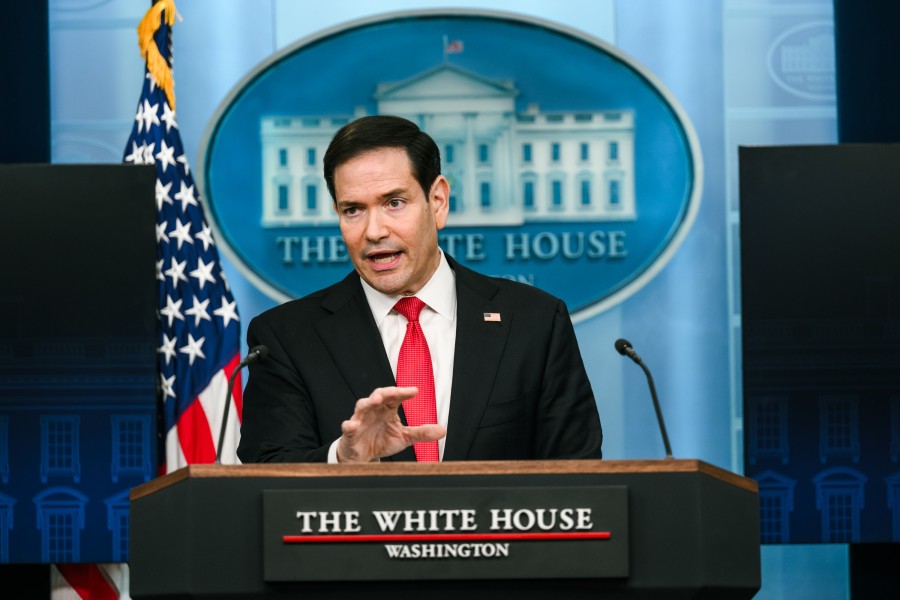
In an effort to address regional security concerns, US Secretary of State Marco Rubio has embarked on a diplomatic mission to engage Gulf allies in discussions about a proposed $300 billion Iran reconstruction fund. This initiative, however, has sparked apprehension among regional partners who fear that the financial aid could enable Tehran to enhance its military capabilities.
Rubio’s visit to Abu Dhabi marks the beginning of a series of talks centered around a recent agreement intended to resolve the prolonged US-Israel conflict with Iran. In these discussions, Rubio plans to tackle the unease surrounding the deal and other outstanding issues with leaders from the Gulf region.
The prospect of a reconstruction fund has become a contentious topic among US allies, who are wary of Iran potentially utilizing the funds to bolster its defense systems. Additionally, Gulf countries are troubled by the agreement’s failure to address Iran’s ballistic missile program, a significant security concern for the region.
Countries such as the United Arab Emirates and Kuwait, which house key US military facilities, have voiced their security concerns following attacks during the conflict. These nations are advocating for stronger assurances to safeguard against future threats.
As Washington seeks to sustain backing for the agreement, Rubio’s diplomatic efforts aim to reconcile the criticism from both regional partners and some US lawmakers. While Gulf leaders have been supportive of initiatives to conclude the conflict, they remain wary of the terms outlined in the deal.