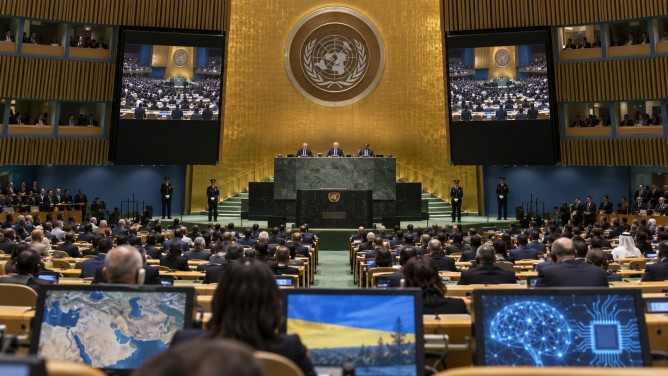
The 81st United Nations General Assembly is set against a backdrop of pressing global issues, as world leaders converge in New York to address conflicts in the Middle East and Ukraine, the rapid evolution of artificial intelligence, and the future of international cooperation. This high-level gathering, which features a general debate scheduled for September 22-26 and September 28, is a crucial platform for diplomatic dialogue and decision-making.
Among the prominent figures addressing the assembly is US President Donald Trump, who will also meet with Ukrainian President Volodymyr Zelenskyy during the session. The war in Ukraine is anticipated to be a focal point, with discussions likely centering on the humanitarian impact and broader implications for food and energy security. The ongoing conflict is complicated by Russia’s status as a permanent member of the UN Security Council, influencing the body’s capacity to respond effectively.
In the Middle East, tensions involving Iran continue to have significant repercussions on regional security and the global energy market. Iranian President Masoud Pezeshkian’s presence at the assembly highlights the importance of this issue, as does the scheduled address by Israeli Prime Minister Benjamin Netanyahu. Leaders will likely engage in talks aimed at mitigating these conflicts and their global impacts.
Another critical topic on the agenda is artificial intelligence. UN Secretary-General António Guterres has emphasized the need for international cooperation and the development of common safeguards as AI technology advances. The United Nations has already established an advisory body to address governance in this rapidly evolving field, underscoring its importance to global policymakers.
Amid these discussions, the United Nations itself faces challenges of financial sustainability and organizational effectiveness. The United States recently contributed $725 million to meet its UN obligations, thereby maintaining its voting rights in the General Assembly. However, calls for reforms and spending cuts continue to echo within the organization. As Guterres approaches the end of his term in 2026, discussions on leadership transition are also expected to surface.