
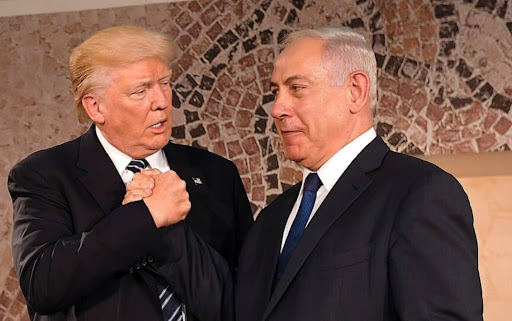
Every military alliance has an economic dimension — a set of dependencies and leverages that shape how partners relate to each other and how strongly each can push back against the other’s preferences. The Trump-Netanyahu relationship is no exception, and the economic dynamics help explain both its resilience and the limits of American influence over Israeli military decisions.
The United States provides Israel with substantial military assistance — advanced weapons systems, intelligence technology, and financial support that significantly enhance Israeli military capability. This assistance creates a degree of Israeli dependence on American support that gives Trump leverage over Netanyahu’s behavior. Theoretically, conditioning or reducing this assistance is one of the strongest tools American presidents have to influence Israeli decisions.
But theoretical leverage and actual leverage are different things. The political cost of actually conditioning military assistance — in terms of domestic American politics, international perception, and the risk of damaging an alliance whose contributions to American strategic interests are significant — is high. No modern American president has imposed serious material consequences on Israeli military behavior. Trump’s response to South Pars — public pushback, acceptance of narrow concession — was entirely in keeping with this historical pattern.
Netanyahu’s dependence on American support is also declining in relative terms in some areas. Israel’s own defense industry has grown substantially, reducing reliance on some categories of American weapons. Israeli economic strength means that financial pressure has less bite than it once did. The dependence that gives Trump leverage is real but has been decreasing over time, which gradually shifts the balance of the relationship.
The Gulf states’ economic leverage — their ability to pressure Washington on energy and trade matters — adds another dimension to Trump’s calculations when managing Netanyahu. Their appeals to Trump over South Pars worked partly because Gulf economic relationships give their concerns political weight in Washington. Managing Gulf ally pressure is itself an economic interest that shapes how Trump responds to Netanyahu’s decisions.